August 2026
In entertainment, change isn’t coming.
It’s already here.
New technologies are changing how guests interact with entertainment. Consumer expectations continue to evolve. Operators are adapting their business models, introducing new attractions, rethinking food and beverage, and finding new ways to bring people together.


For developers and owners, that creates an important design challenge:
How do you create a venue that is successful today and still has the ability to succeed tomorrow?
The answer isn’t trying to predict the future. It’s designing for the ease and probability of change.
As we explored in Part One of this series, The Entertainment Destination Playbook Part 1: Designing for Revenue, Flexibility, and the Guest Experience, successful entertainment destinations are designed around the entire guest experience. But creating a great experience at opening is only part of the equation.
The most resilient venues are designed with the understanding that the guest, the technology, the operator, and the market will continue to evolve.
At TK Architects, we believe future-proofing starts by building flexibility into the design from the beginning.
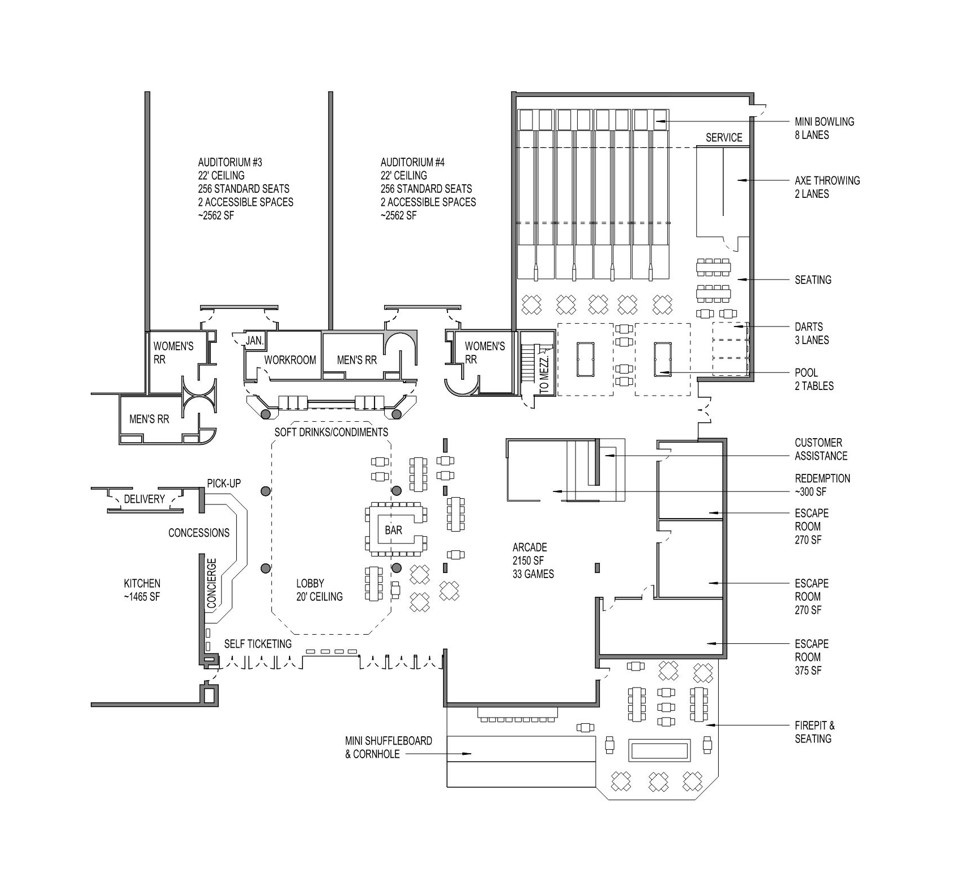
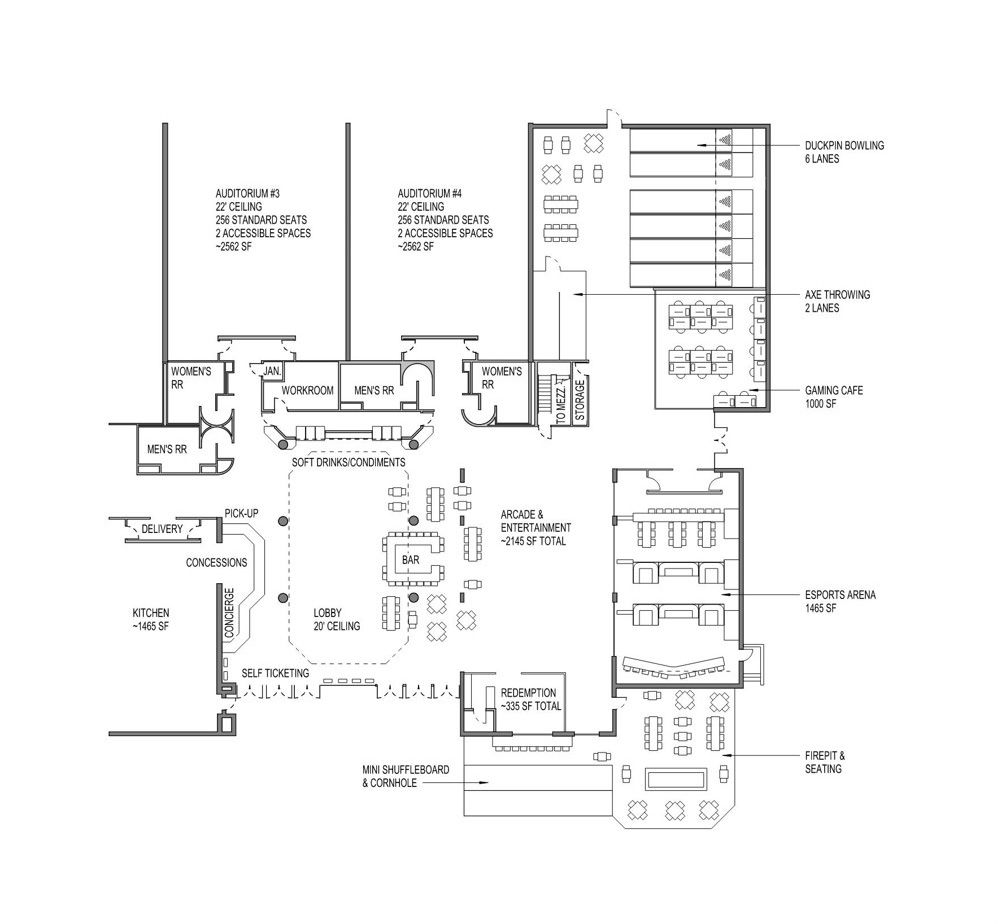
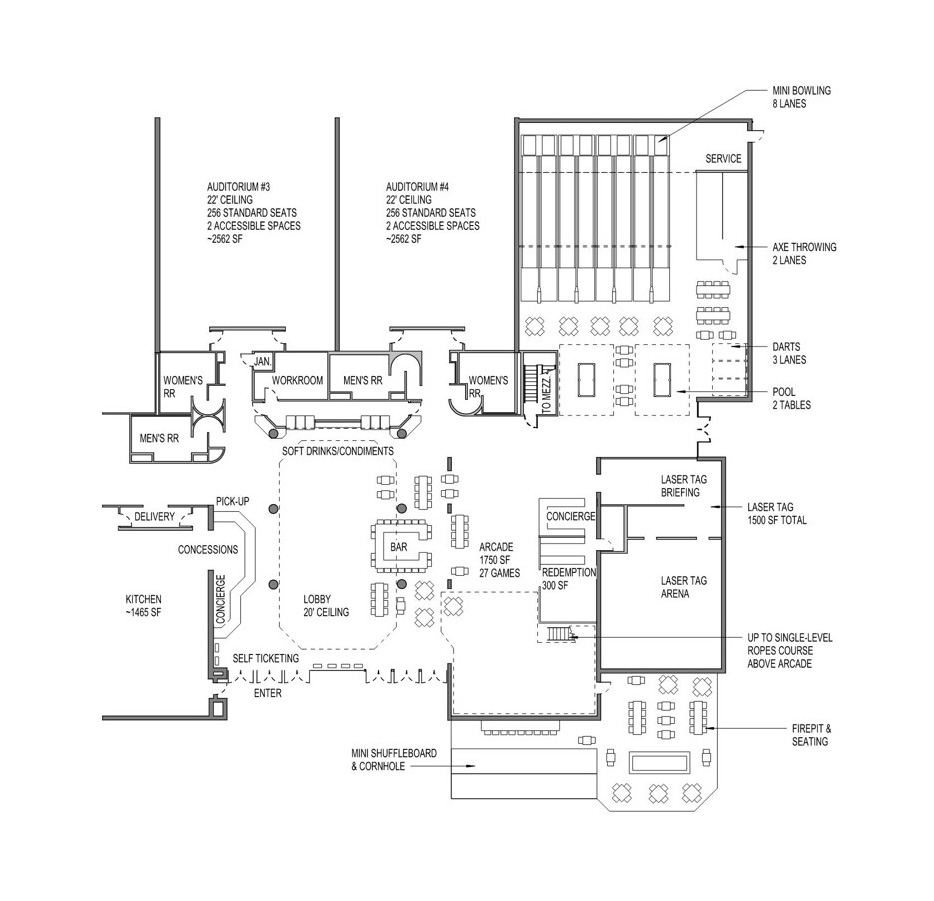
You can see in this Building footprint, several different combinations of amenities and configurations are possible.
Design for Change
Entertainment concepts can change quickly.
A space designed around today’s most popular attraction may need to accommodate something entirely different a few years from now. Technology that feels cutting-edge at opening can become outdated. A food and beverage concept may change with the market. An operator may discover that one part of the venue consistently outperforms another.
The most successful projects account for that possibility.
Future-proof design doesn’t mean creating generic spaces that could be used for anything. The goal is to create spaces that are highly effective for their intended purpose while maintaining enough flexibility to adapt when that purpose changes. That might mean planning rooms with multiple potential uses, creating adaptable partitions, providing accessible infrastructure, or considering how equipment and technology can be replaced without major reconstruction.
Flexibility is also about understanding the physical environment. Structural grids, equipment access, ceiling heights, mechanical systems, and circulation patterns can all influence how easily a space can change. A room may begin as an entertainment attraction and eventually become something completely different. A lounge might become an event space. An F&B concept might expand into an adjacent area. A new technology might require additional equipment or infrastructure.
Good design doesn’t need to know exactly which of these scenarios will happen. It simply needs to leave room for them to happen.


That is the difference between designing for certainty and designing for resilience.
Build the Infrastructure for Tomorrow
Some of the most important future-proofing decisions aren’t immediately visible to guests.
Power. Data. HVAC. Acoustics. Structural capacity. Equipment access. Technology pathways. These systems form the backbone of an entertainment destination, and planning for them early can make a significant difference in how easily a venue can evolve.

Technology requirements, in particular, can change dramatically over the life of a project. New displays, interactive experiences, gaming systems, projection technologies, lighting systems, and other digital components may require additional power, data, cooling, or equipment space. If those needs aren’t considered during initial design, accommodating them later can become expensive and disruptive.
Thoughtful infrastructure planning provides options.
It can allow an operator to upgrade technology without completely reworking walls and ceilings. It can provide pathways for future cabling and equipment. It can create access to systems that need regular maintenance or replacement. The same principle applies to the technical systems that support the guest experience.
Acoustics may need to separate increasingly diverse entertainment offerings. HVAC systems may need to support changing occupancy patterns and equipment loads. Electrical systems may need to accommodate new technologies and higher demands. Structural systems may need to support equipment that wasn’t part of the original program. These aren’t always the most visible elements of a project—but they can have some of the greatest long-term impact.
The goal isn’t to predict which technology will dominate the next decade. The goal is to make sure the building is ready when it arrives.
Plan for the Life of the Building
Every entertainment venue eventually reaches a point where it needs to evolve.
Sometimes that means a complete repositioning. More often, it means targeted improvements—a refreshed lobby, upgraded seating, a new F&B concept, technology upgrades, auditorium renovations, or the introduction of a new attraction. The best time to think about those future improvements is before the building is constructed.
Design teams can consider how future renovations might be phased, how construction can occur while portions of a venue remain operational, and how new systems can connect to existing infrastructure. This becomes particularly important for entertainment destinations where closing an entire facility may not be an option.

A renovation strategy can help owners make improvements incrementally, allowing a venue to continue generating revenue while portions of the property are updated. For an existing building, this same thinking can help determine whether a space should be renovated, repurposed, expanded, or reimagined entirely.
Future-proofing isn’t only about new construction. It’s also about giving existing destinations a path forward. And that path is influenced by more than the physical building. Operators continually evaluate guest behavior, revenue, staffing, maintenance, energy use, and the performance of individual spaces. Those insights can lead to changes that weren’t part of the original program.
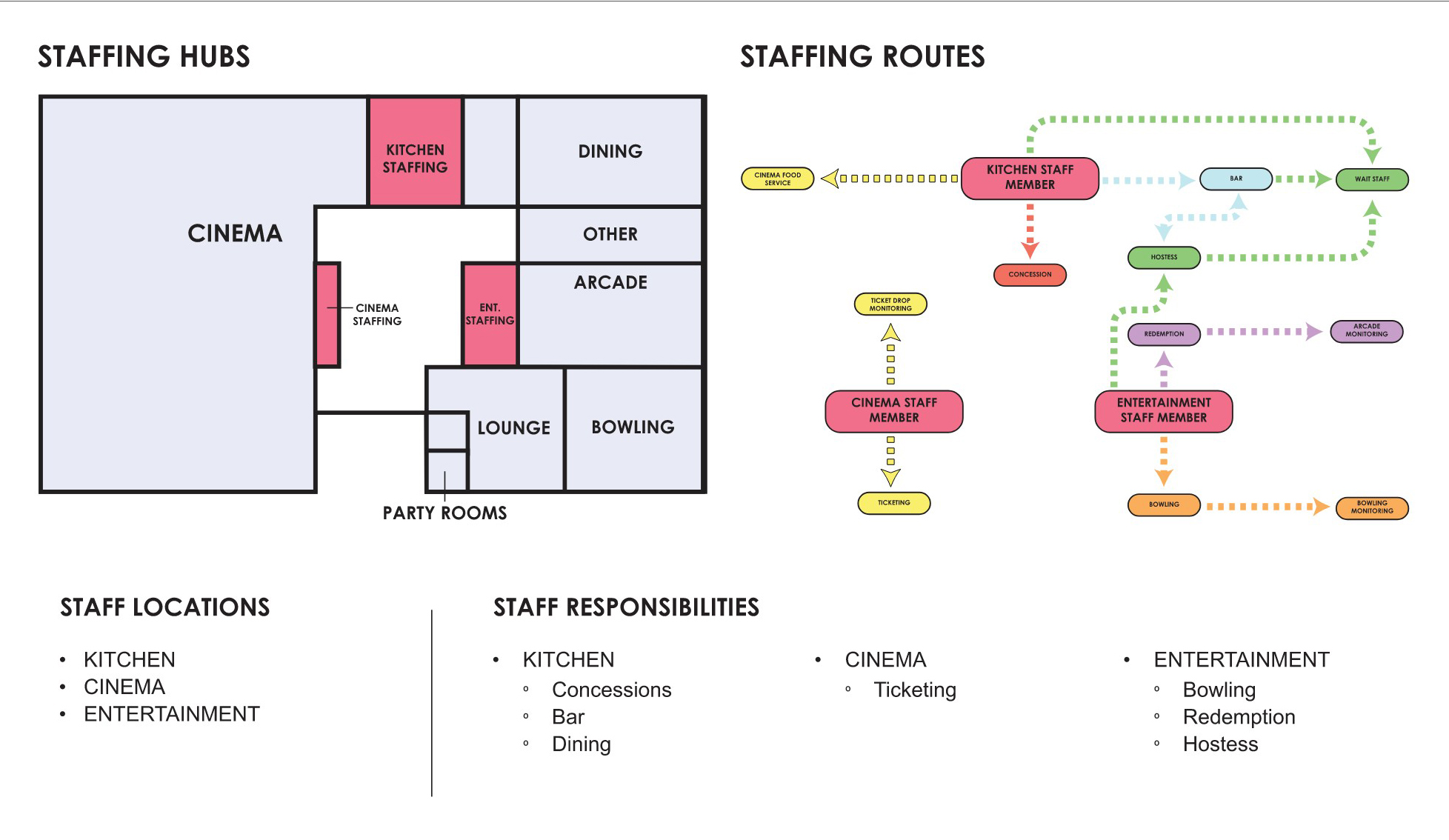
A successful venue gives operators the ability to respond. That might mean reconfiguring a space to accommodate a stronger-performing attraction, expanding an F&B offering, adding new premium experiences, improving circulation, upgrading technology, or simply refreshing an area that no longer reflects the brand.
When the original design anticipates these possibilities, those changes can become opportunities rather than obstacles.
The Building as a Long-Term Investment
A future-proof entertainment venue isn’t necessarily the one with the most technology, the most attractions, or the biggest footprint.
It’s the one that gives its owner the most options.
- Options to adapt.
- Options to renovate.
- Options to introduce new experiences.
- Options to respond to changing guests.
- Options to invest strategically rather than start over.
That requires looking at architecture and engineering as more than the process of delivering a building. They become part of the long-term business strategy.
At TK Architects, that perspective is built into how we approach entertainment design.
With experience across cinema, family entertainment, food and beverage, retail, and other entertainment environments, our teams understand that every project has different goals, operational requirements, and opportunities.
Our full-service approach brings architecture, interior design, concept design, engineering, branding, documentation, and construction support together to help clients think about the entire life of a project—not just the day it opens.
Collaboration is a critical part of that process. Architects, engineers, operators, developers, consultants, vendors, and technical partners all bring different perspectives to a project. Bringing those perspectives together early can reveal opportunities to create a venue that is not only exciting at opening, but practical to operate and evolve.
The result is a building designed not simply as a finished product, but as a platform for what comes next.
Designing Beyond Opening Day
The entertainment industry will continue to change.
There will be new technologies we can’t yet predict, new attractions that haven’t been invented, new ways for people to socialize, and new expectations for what an entertainment destination should provide.
We don’t need to know exactly what those changes will be. We need to design environments capable of responding to them. That’s the real opportunity behind future-proof design.
A successful entertainment destination should be memorable on opening day, but it should also have the foundation to remain relevant years later.
Because the best investment isn’t simply a building that works today. It’s a destination that has the ability to keep working, changing, and growing with its guests.
At TK Architects, we believe the future of entertainment design isn’t about predicting what’s next.
It’s about being ready for it.
Principal, Melissa Miller